
Does my logo look big in this? Sizing your images for social media.

One of the things I notice a lot with company pages on Facebook and other social media sites is the poor resizing of logos and other images so they appear correctly.  Logos unfortunately comes in lots of sizes and unless they are resized they just don’t fit and instead only display partially or zoom in on one part of the image or logo.  In general the photo editors on social media sites are pretty basic and only really allow you to move around an image.

Many people I speak to complain they don’t have the software but there are free online resources available.  Here is a quick guide on how to make your images fit.

First up you first need to know the exact dimension that are use.  This cheat sheet from HubSpot is a very handy guide but you may need to double check with the social media site for any changes.  For example although Facebook Page profile pictures are square and displays at 160×160 pixels you upload must be at least 180×180 pixels.

Essential Cheat sheet to Social Media Cover Photos. http://blog.hubspot.com/social-media-cover-photo-sizing-cheat-sheet

Next you need to resize the images.  There are lots of online photo editing sites but Pixlr.com allows you to edit without signing up and is pretty slick.

Once in the service you have options of what level you wish to use.  I used the advanced function as it had extra functionality built in.


Pixlr Editor Image Resize, plxlr.com

Ensure you unclick Constrain Proportions

From here select the image you are going to edit.  If on your computer then Open Image from your computer.  Next click on the Image tab at the top and click Image size.  Then input the image size you need as per the exact measurements – normally in pixels width and height.  In this example its 180 X 180 for the Facebook’s Page profile picture.  The real important part here is to make sure you unclick the Constrain Proportion box as otherwise it will either default to the proportions measurement and you will be left with the wrong size or you get a zoomed in section of the image.

Finally just save your photo and then upload as normal on your Facebook page.  As you maybe doing this a number of times for Twitter to the various Facebook dimensions its worth saving the file name with the social media platform name and the dimensions used in it.

This can really save a lot of time and present you company image in the best light.


Should PR Own Social Media?

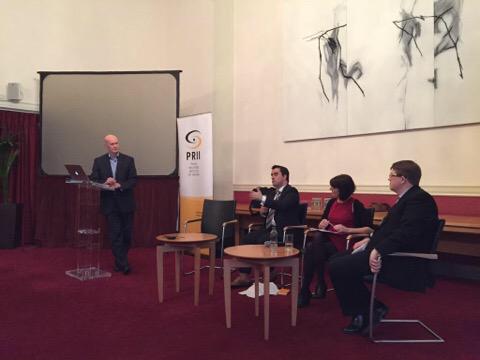
On the 19th of February I have the pleasure of chairing a session organised by the PRII Entitled Should PR Own Social Media?

Normally these type sessions can tend to a self supporting and predictable with little dissent.  However this one is comprised of seasoned representatives from the other organisations competing/operating in this space including:

  • Christian Hughes, Communities Manager with Irish International,
  • Colm Ó’Riagáin, Digital Account Director with WHPR,
  • Eoin O’Suilleabháin, Social Media and Digital Marketing Manager with Bord Gáis Energy,
  • John Ring, Managing Director of internet marketing company RingJohn

As I was researching and gathering my thoughts I stumbled upon an old piece from 2010 in the Irish Marketing Journal that I had contributed to and had forgotten about.  A lot of the contributions in the article are as true now as then so I will try not to repeat the same points.

The PR industry naturally responds that it is best positioned as it has the broadest view with tentacles in all corners of the business (especially inhouse), is used to dealing with outreach and engagement, understands current cultural and environmental factors, are guardians of the organisations message, can rapidly generate crisp and clean content – the list goes how.

However the social media scene is also littered with poor examples of PR executives engaging in social media outreach – from treating bloggers like media and bccing them on general and untargeted press releases (not best media practice either) to editing of client Wikipedia pages scandals.

Social outreach means researching and building relationships with a new set of influencers with different agendas and needs than traditional media.  PR has the skill set but all this entails more time and in an industry driven by charging for time this is a problem unless the client is willing to pay.

David Murdico executive creative director and managing partner at Supercool Creative does a good job of detailing where PR can take a lead role beginning with strategy development.

However following the line of who has the best skills never really answers the question.

Christopher Penn from Shift Communications makes some very sensible points on the topic rephrasing the question to

Who should own a hammer?” is the wrong question. “Who has a use for a hammer, and can they wield it skillfully?

He rightly points out that for some organisations social media is a customer relations tool and the PR team is probably not crucial.

Like every other industry PR is not homogeneous and not all executives are equal in their abilities and understanding.  Penns final line captures this nicely

“Who should own social media? Whoever can use it to help build your business, that’s who.”

Sophie Daranyi, CEO at marketing agency Haygarth reflects what most considered articles on the topic say which is that the best results are achieved by taking an integrated approach with agencies working collaboratively and leveraging their core strengths.

Some of the advance tweets and Facebook posts on this event have brought out divergent views with some comments  saying that PR should have very little input unless it a crisis communications situation.

Some of my own views are:

  • PR has lots to contribute as do the others chasing this arena.
  • New skill sets from content creation in different media to technical skills are needed.
  • SEO will start to offer traditional PR to supplement SEO PR services.
  • SEO and PR will form closer unions in very short period of time.
  • PR’s core domain in media relations will come under threat from savvy social media users engaging with journalist online.
  • PR executives need to move from “getting” social media to time consuming greater content creation and community engagement.
  • Budgeting power for social media will continue to migrate to media buying agencies.
  • Marketing managers are starting to appreciate that social media is not free.
  • Those able to mine social data and interpret it will rise in importance.

I am putting together some questions for the speakers and would be delighted to include suggestions from any comments below.  Also my view is only one view and what better way to frame the introduction than crowd sourced from the community.


Comments appreciated.

Early adopters wanted. Fund your project for free.

In the current economic climate fundraising is top of mind for all clubs, schools and non charity associations.

Most are manned by voluntary staff who try to squeeze in raising funds while juggling work and family commitments but are all committed to things they are passionate about.

Ideas Brain Storming

Fundraising committees are generally very good at coming up with new ideas of fundraising ventures but fall down when it comes to getting the money in.  Building a website or technology platform can also be expensive and not their core competency.

Where clubs are very strong is that they normally have excellent networks (locally and internationally) but tapping into these is easier said than done.

10k Road Race Fundraiser

With this in mind we have built a crowd funding and payment processing site called PledgUp.com.  Its premise is very simple.  Tell people what you are fundraising for and ask them to donate.

It works in a very easy way.

  1. You create an individual profile and a group for what you are trying to raise funds for.
  2. You then add a campaign for what you are doing to raise funds (either a straight forward donation or you might have some initiative/event you are organizing.)
  3. You then get a link that you can send to all your friends or contacts by email, sms or by posting on social media sites.
  4. They are then brought to a page where they can donate via PayPal.

The more people from the club who set up profiles and add the campaign the wider a net is cast.

PledgUp

One of things this site is designed to do is to replace or supplement printed sponsorship cards which are limited by the amount of people you physically meet.  Even when people fill them out, they still need to go back after the event and collect the money.  With PledgUp.com people can simply donate online and you know how much you have raised instantly.  The platform is very flexible and can accommodate lots of ideas that people have.

We are looking for early adopters of the service and would be delighted to either talk you through how it works or to set it up for you.

There is no charge and for the early adopters we are waiving our small commission.

We have had a really positive response to date and want to hear about other things people would like to raise funds for.  It could be a sports club, school or a group of friends trying to fund an idea they have.

If you feel passionate about something but need a way of funding it we would really love to hear from you.

My email is eoin @ knudger.com (minus the gaps) or try it out on www.pledgup.com


photo credit: <a href="http://www.flickr.com/photos/familymwr/5218572671/">familymwr</a> via <a href="http://photopin.com">photopin</a> <a href="http://creativecommons.org/licenses/by/2.0/">cc</a>
photo credit: <a href="http://www.flickr.com/photos/globalx/7097323399/">Global X</a> via <a href="http://photopin.com">photopin</a> <a href="http://creativecommons.org/licenses/by/2.0/">cc</a>

Are you passionate about a cause but cannot raise the money?

Since we changed focus on the start up I cofounded (www.knudger.com) at the Dublin Web Summit from an individual focus to fundraising for clubs, associations and charities, the funding gap for these organisations has become even more evident.

Many over stretched themselves in the good times, many just have big overheads and most have painful decisions to make.  Many GAA clubs we have spoken to are facing deficits of over €30,000 and raising subscriptions at best gets a very negative reaction.

Fundraising takes time and anything that can generate money and take the least amount of members time is likely to fall on receptive ears.

knudger.com home page slide

Slides on Knudger.com homepage

Knudger.com helps to solve part of this problem for clubs but a lot of voluntary organisations we spoke to were still finding getting donations and collecting money from fundraising events a real drain and disappointing.


PledgUp Logo

PledgUp Logo

With this in mind we have built a prototype crowd funding platform (www.PledgUp.com) where people can use their networks to fundraise for almost anything.  We have tried to make it as simple and painless as possible for people to set up project they are passionate about and want to raise money for.  Once they are set up they can ask for straight forward donations via credit card or link it to a fundraising initiative such as a sponsored walk.  We have built in lots of additional functionality and now looking for early adopters to try it out for us.

Tidy Town

Scoil Mhuire Tidy Town Clean Up - rights BallyMore Bugle

We are trying to broaden the range of things that people could fundraise for by making it simple.  Obvious areas are sports clubs or schools looking to raise money for new premises/equipment or who are running a 10K and want an online way of collecting the money.  However how about the couple getting married in a recession who want guests and friends to help fund the wedding rather than buying them another toaster.  Or the Tidy Towns committee looking to fund a town makeover through their large group of potential donors who have emigrated.  Quite often small organisations or people who have little resources have very connected networks.  We are trying to help them leverage that network and make it easy for people to donate.

 So if you are a sports clubs or an association or individual looking to raise money for a project you are passionate about we would love to hear from you.

The prototype is on www.pledgup.com but if you are interest please drop me a line at eoin at knudger.com (put in @ instead of at – trying to avoid spam) and I would be delighted to support and help you through the process.


eoin@knudger.com


The Curious Case of Twitter Getting Younger

Has twitter leaped frogged a generation?

Digital Native - Copyright Charlotta Wasteson

I have noticed for quite some time that trending topics have moved from news and social media events I was reasonably familiar with, to topics I had no idea about. In addition the topics seemed to relate to a much younger audience especially with pop stars and X factor type topics.

Around the same time I spoke to Eoin O’Suilleabhain in Bord Gais about the Jedward Bord Gais Twitter Takeover (video here).  It hit the trending topics and even resulted in a group of teenage girls finding the actual location they were tweeting from. They later did an equally successful Google+ hangout session  – all aimed at the teenage Jedward audience.

A few years ago the general wisdom on Twitter was that younger users found the lack of a centralised profile and a customisable page unattractive about the platform. Few people ever visit a profile page after they start to follow an account on Twitter. This seemed to have changed in line with the growth of celebrities on Twitter.

Twitter Logo

Twitter Bird. Copyright Andreas Eldh

It was all brought home to me recently when a casual chat with my niece revealed that she had a twitter following of over 1,000 and tweets daily.  Her friends have equally sized followings.  Facebook and Twitter have now completely replaced her once expensive texting habit. One particular interesting factor was a swing of a couple of people unfollowing her friends when they stopped tweeting while on holidays indicating really sticky behaviour. My gut feel is that their connection to Twitter will not be incredibly loyal and they will follow wherever their friends gravitate to. However a Klout score of 41 is not bad for a 15 year old who is casually playing around with the platform.

One really odd factor in this shift in Twitter demographics is how college students seem be have been bypassed by Twitter. I have given a few talks in GMIT and DIT and in each I ask about their online habits and the resounding response seems to be Facebook and not a lot else. Blogs feature particularly low and Twitter outside of lurking does not seem to be an engrained activity.

I imagine the time is ripe for some really detailed research into the area but there are changes afoot.

Below are some answers to a fairly basic questionnaire. Responses as you can image are fairly brief.

When did you start to use twitter?

-About a year and half ago or so Why did you start to use it?

Were your friends using it?

-Cant remember to be honest

How often do you tweet?

-Maybe once a day or so.

How many hours do you spend on Twitter?

-A day probably half an hour to an hour somedays depending on the day

How do you access Twitter?

Computer/smartphone/ipod touch -Computer and iphone used to use my ipod but I have an iphone now

Do you login via the twitter.com site?

-No have the app for my phone and yes for the computer

Do you ever post images via Instagram etc?

-Just set instagram up like last week so not yet no

Do you follow celebs and trending topics?

-Yes I follow some celebritys (Bernard brogan ) not trending topics though

Do you view it as an extension of texting?

-Yes I never text anymore

What you normally post about?

-Anything really

Do you lurk much – looking at other peoples profiles and updates instead of posting?

 -Yes haha

Do you use Twitter instead of texting?

-Yes but I use facebook a lot more so I use facebook instead of texting more

How do you grow your follower list?

-I used to care about followers etc but im not really bothered about it anymore but when I did I just used to follow loads of randomers and they would all follow back!

How important is your profile photo?

Not that important tbh because all the people that follow me probably live in mad countries like Romania and stuff so ill never see them in real life so I don’t really care what it is

What size networks do you have?

- Over 1,000 followers

What do your friends do on Twitter?

-Tweet and creep haha

How long do you spend on Twitter? -Depends if im doing something or not sometimes 5 minutes sometimes 3 hours .It varies

Do you have any privacy concerns – that your updates are public?

-Not really, on facebook yes but I don’t really post anything bad or controversial on it so ive nothing to hide

How does your twitter use compare to your Facebook use? – size of network, volume of posting, hours spent. Etc?

-I would post a lot more on twitter than I would on facebook but I would use facebook a lot more I find its easier to use and because on twitter I follow 1,000 people there is always millions of tweets and I never read any of them but on facebook everyone im friends with on facebook I know so im more interested in what they post and I talk to way more people on facebook because more people use it and its way easier and more private to talk to people on that.


Longford Town Christmas 12/12/12 Campaign

Longford Chamber of Commerce have launched a really interesting initiative called 12/12/12 to help encourage people to shop in the town on the 12 of December 2012.  They have organised for retailers in the town to offer special discounts on the day and also to stay open later.  New offers are being added every day but here’s a snapshot of what’s on offer.

As part of the campaign Knudger.com is helping to promote the message and also to fundraise for some local groups and charities.  Once the registered groups share the campaigns via social media or email and their network click on the links to the 12/12/12 campaign they are paid 1 euro per visit.

To see the other organisations involved and the fundraising system in action visit Knudger.com.

More details of the Longford 12/12/12 Christmas Shopping will be posted on their Facebook event page over the next two days.

A year later and finally a product.

What a year since I left the PR industry to set up a start up with a web developer.

Multiple test platforms, revisions of business plans, financial spreadsheets, revenue modelling, investor presentations, navigating the support maze, pivots and all the heart ache that goes with a start up but finally a product to launch.

I have learnt a huge amount, met some incredible people and made many mistakes along the way but finally we are launching a product at the Dublin Web Summit today.

knudger logo

Knudger Logo

Knudger.com is a social promotion service that pays people per click for posts on their social media profiles.  The product we are launching is a social fundraising product called Knudger Groups.  The idea behind the product is that clubs, charities and organisations are struggling with fundraising and their members are cash and time strapped.  In addition people will do extraordinary things to help a local club.

With knudger groups we get a local charity or sports club to set up a group on knudger.com and to ask their members to join and connect their social media accounts.  We find a symbiotic or matching company that would benefit from promoting itself through the club.  Take a GAA club and Club Energise or O’Neill for example.  A campaign (suggested text, link, image and description) is generated and the advertising company upload how how much they wish to spend and how much they would like to pay per click.  The club member then click on the campaign on knudger.com and the text/link appears in the social media networks they have picked.  Everytime one of their friends or followers click on the link the club is paid a donation.  Each club member gets to see what the other members have posted and the revenue they have generated.

At the end of the campaign a cheque is written for the club.  The advertiser gets referred traffic to their website, social media seeding (people talking about them in social media) and social signals (search engine benefits).  They only pay for visits to the site rather than posts so all highly transparent.

To launch Knudger Groups we are teaming up the Dublin Web Summit to raise funds for their designated charity Movember.  For the duration of the summit visitors to Knudger will be brought to the Dublin Web Summit – Movember Group.  Once people join the group and register their accounts they will see the campaigns promoting Movember.  Knudger will post to their social networks with the text they wish to use and Movember gets paid for every click generated.

movember

Movember Campaign on Knudger

The link for the campaign is www.knudger.com/dws and I would really appreciate it if you would help me and the charity by registering and posting and sharing the word.

All anxious moments as we put the service live and will let you know how it went for us after the event.

Final tip: most people find registering with your twitter or facebook account is fastest.

Here is the flyer for tomorrow and about Knudger Groups.

Knudger Groups Flyer and Movember Campaign Knudger Groups Movember Campaign.

Are comments the cheap semantic analysis?

Public relations or media campaigns have always been difficult to measure and the subject of much debate on what should be measured and how.

Most of the time the processes used have tended to be very crude.  Some organisations just measure the size of the clipping and multiply by factors of 3 or 5, some try to adjust for the prominence of the company/organization and some tried to create a measure of desired message contained in a clipping.

Organisations such as Kantar and O’Leary Analytics also do a good job of using technology and manual intervention to give measures of the success of a campaign.

In general though many companies tended to reply on any publicity is good publicity approach and were only really concerned about how much it would have cost to buy the space if it were advertising and not the impact.  The job was to influence the journalist and hopefully this would influence the public.  Sometimes these audiences agree but not always and with pure reporting there tends to be little outside of the presentation of the facts, so how people interpret it varies wildly.

PR budgets are normally a pretty small spend in over all marketing costs so companies tended not to invest in market research to measure the impact of campaigns.  Hence much was left to conjecture.

Now that media is well down the path of embracing aspects of web 2.0 and social media they have also accidentally generated some really nice feedback tools to get a nice snap shot of public mood.

Take the announcement today about the halving of sick pay for the public sector.

Previously radio show call-in’s would have been the most accessibly accurate measures of the mood of the land but looking at the comments and social media shares from the new and traditional media gives a real insight into how people feel about the announcement.

The Journal are really the masters here.  This story got 3,415 views and 58 facebook shares but it’s the 51 comments where you really see how divided people are on the issue and the genuine anger on both sides.

The Irish Independent had less at 16 shares and the 7 comments were more pithy.

The Irish Times predictably got one long and well considered comment, 3 Facebook recommends, 8 tweets, 10 shares.

Interesting Newstalk has no comments and around 7 Facebook shares while RTE does not allow comments and only had 1 Facebook and 3 Tweets.

Newswhip tracking the speed of article take up

Newswhip also give a nice metric on the articles speed as it gets taken up by social platforms.

The debate also raged on Boards.ie where some of the media articles were posted and discussed or added to previous discussion on the same topic.

Along side this there is also the chatter and liking on Facebook profiles or replies or retweets through Twitter, some of which can be easily tracked.

Trending topics and the ever growing freely available social search tools also add to the arsenal.

In an era where semantic analysis is still in its early days these give PR practitioners and policy makers a quick and easy to digest snap shot of the impact of a piece of communications.

Getting the slickest procedure, working out how to interpret and reporting all this in a meaningful way is going to be difficult but in the day of instant reaction there must be great value in being able to react before the printed addition arrives and the phone call start coming in.

Those who get slick with these tools stand the best chance of becoming the crystal ball gazers.

(Addition)

The day after I wrote this I again checked the comments.  Some big jumps as people signed in at home and added to the debate.


Biggest jump in the Journal comments.


Comments on the Sick Pay Article on the Irish Indpendent website- jumped from 9 to 89 overnight.


IrishTimes.com comments on Public Sector Sick Pay Decrease.

The curious case of the CV and the missing social media sites.

Not long ago I spoke to some education course directors about the skills we would like to see from students as they enter the communications industry.  One of the areas that was discussed was the inclusion of blogging and other social media presences on their CVs.  These would really help give a rounded view of a candidate and their writing skills/knowledge of social media/ability to converse.  The response back was that students were too shy.

Recently I also had a unusual experience with CVs and social media.  I was asked to sit on an interview panel for a social media position.  The CVs were all very articulate and impressive.  Some were standard layout, some html and some were designed by a graphics designer and very pleasant to read – similar to a magazine format.  However the one thing that they all lacked was a link or url for their social media sites.  I managed to find most of them through search so they all had reasonably robust presences.  I expected that the candidates would rationalise that these sites were personal but interestingly all put it down to an oversight.  One candidate pointed out that she has a fake and real twitter account and so had risked interviewers getting a very different perception of her.  All reported that they include their social presences on their email signatures but it appears that the strict adherence to the CV format produces some curious holes in peoples presentation of themselves.

I have seen some really nice CVs that incorporate some slick Web 2.0 design and I think I would be impressed to get one of these infographic Resumes/CVs.

If nothing else please make sure you include links to your social media sites – it will save the interviewer a bunch of time and means they will at least find the real you.

Update 21 August.  Met Jordan McDonnell at a Digital Marketing Institute course last week where he shared the trajectory exposure experience he had with an unorthodox CV/resume he loaded on to SlideShare.  Really worth a look for inspiration and a fantastic story behind it.